Advertisement
U.S. Employers Still Struggling to Fill Science, Math, Engineering Jobs
Get articles like this
in your inbox
The longest running and most trusted source of information serving talent acquisition professionals.
Advertisement
By Shannon Stevenson
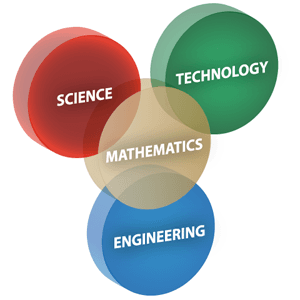
Despite the recession, the lack of jobs and the training fees charged to U.S. employers hiring foreign workers on temporary H-1B work visas, the U.S. Department of Labor’s recently released Foreign Labor Certification Annual Report shows that U.S. employers are still struggling to find qualified U.S. workers in the fields of Science, Technology, Engineering and Math (STEM).
Employers report recruiting for STEM positions for over two years in hopes of ultimately finding a qualified U.S. worker – often resulting in the employer losing lucrative contracts or having to resort to using contract workers.
Although an employer is not required to show the unavailability of a qualified U.S. worker when sponsoring a foreign national for a temporary H-1B work visa, an employer seeking to hire a foreign worker to work permanently in the U.S. must obtain a labor certification from the Labor Department before it can submit an immigrant visa petition to U.S. Citizenship and Immigration Services.
Prior to submitting an application for labor certification, the employer must perform a labor market test to determine whether U.S. workers are able, willing, qualified and available for the position in the area where the job will be performed. If there are no such U.S. workers, the employer may file an application for labor certification evidencing the recruitment efforts undertaken and any results thereof.
The employer must also demonstrate that employment of the foreign worker will not adversely affect the wages and working conditions of U.S. workers similarly employed. The Labor Department’s Annual Report confirms that employers should not have a difficult time showing the unavailability of qualified U.S. workers for STEM positions.
Recognizing the importance of STEM positions to the competitiveness of the U.S., President Obama’s 2012 budget proposals seek $80 million to recruit 10,000 new science, technology, engineering, and math teachers in the next two years, with long-term plans of recruiting 100,000 teachers in the next ten years. STEM careers are outpacing other professions in annual growth rates.
Therefore, employers who previously had polices against visa sponsorship are quickly realizing that sponsoring foreign workers for H-1B work visas and ultimately for U.S. permanent residence is a necessary investment to remain competitive in the global marketplace.
This was originally published on Fisher & Phillips Cross Border Employer Law blog.