Sometimes, in your daily reading, you come across an article and become a “cheerleader”. You savor every word, every phrase, and how eloquent the words play into a symphony.
Marcus Buckingham’s recent Harvard Business Review article reflects on the rise of “Experience Intelligence” and captures a profound shift that many of us working inside organizations have sensed for years but perhaps lacked the language to articulate. Leadership is no longer defined primarily by authority, technical competence, or even strategic clarity. Increasingly, leadership effectiveness is defined by the quality of human experiences leaders create.
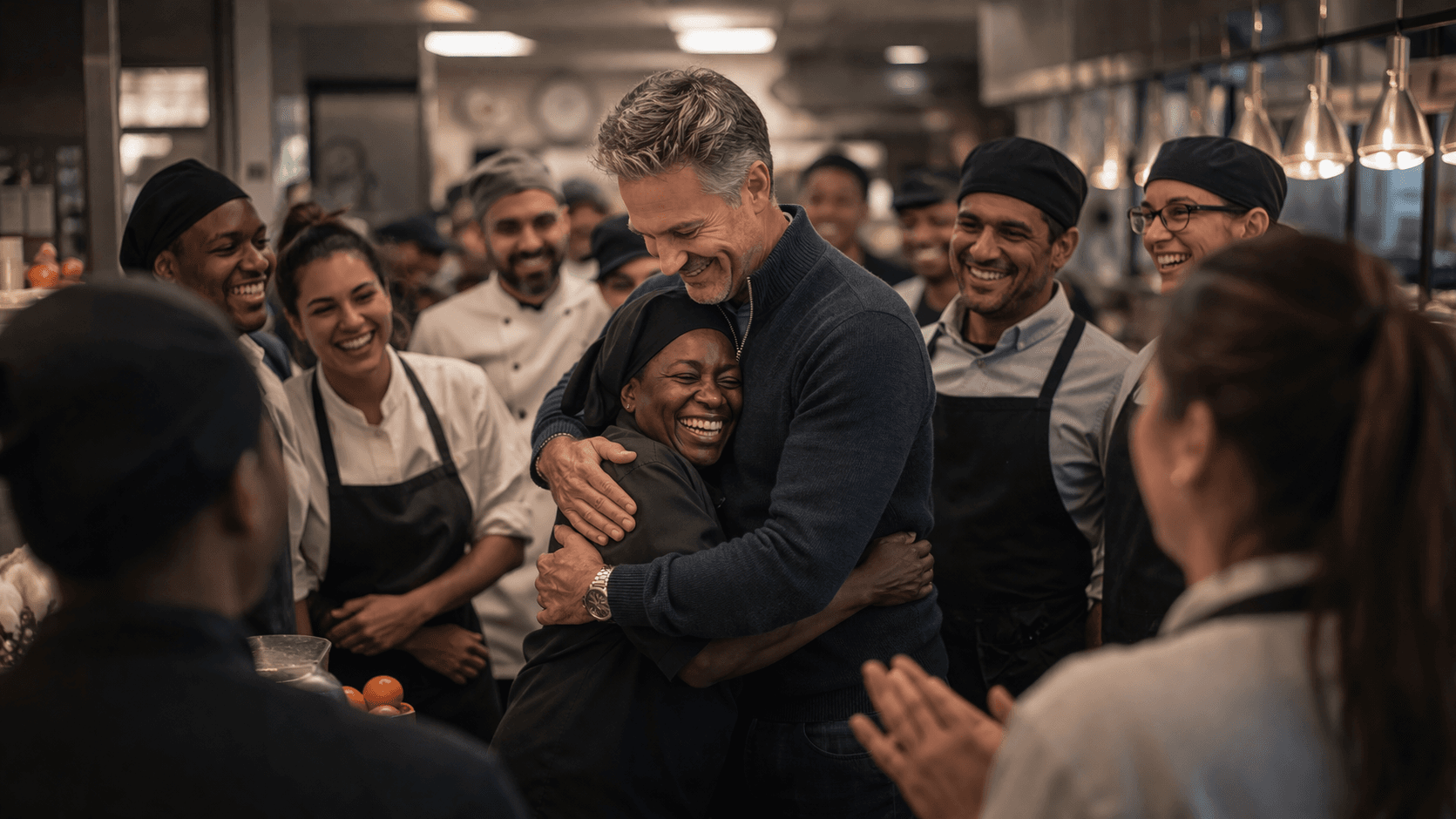
His observation of Josh D’Amaro at Disney is a must-read for leaders and aspiring leaders, where a cook greeted him with a spontaneous hug that collapsed the hierarchy. It reminded me of the intimacy of human connection.
I remember an article I wrote years ago about a leader’s last day, as he was moving to a new job at a new company.
He drove to work as usual, got out of his car and proceeded to the entrance. What he did not expect was what would happen when the door opened. As far as the eye could see, there were people lined up in the hallway, cheering and clapping. Naturally, he became overwhelmed. My thought was “This is when you know that you have achieved something important by creating an amazing team, and they thank you like this on your last day.”
Some of those workers came in on their day off to say goodbye. When I saw it, it was not merely an anecdote about charisma. It is evidence of a deeper leadership capability: the ability to shape how people feel about their work, their organization, and their future within it. What Marcus witnessed was not symbolic leadership or performative visibility; it was the deliberate cultivation of emotional alignment.
This concept resonates deeply because it touches the core of organizational health. For decades, leaders have been evaluated through the lens of performance outcomes, financial results, or operational efficiency. Yet the true linchpin of sustainable success has always been the human connection that binds individuals into collective purpose. Experience Intelligence gives this reality a name and a framework.
At its simplest, the emerging leadership equation can be expressed as:
People Skills + Technical Skills = Organizational Health.
Historically, organizations have placed disproportionate weight on technical expertise when selecting leaders. The assumption has been that the most capable technical contributor will naturally evolve into the most capable leader. This assumption has proven flawed over time. Technical mastery enables execution, but leadership requires a different form of intelligence — one rooted in empathy, relational awareness, and the ability to energize others. Experience Intelligence reframes leadership not as the extension of technical competence but as a distinct capability centered on shaping meaningful human experiences.
A useful metaphor for understanding this shift is the contrast between professional athletes and corporate leaders. Athletes train continuously. They view performance as a discipline requiring structured routines, constant feedback, and deliberate conditioning. Leadership in many organizations, by contrast, is developed episodically. Leaders may attend occasional off-sites, participate in sporadic workshops, or receive coaching only during periods of crisis. This fragmented approach fails to produce the adaptive, emotionally intelligent leaders that modern organizations require.
If leadership truly represents a strategic differentiator, then leadership development must evolve from event-based interventions to system-based disciplines. Our cars once required regular tune-ups to maintain performance. Leadership capability demands the same rigor. Continuous recalibration of mindset, behavior, and relational capacity is essential to sustaining organizational health.
“Experience Intelligence” also challenges the long-standing bias toward technical authority as the primary source of leadership legitimacy. The future organization will not be led by individuals who simply know more, but by those who connect more deeply. Leaders who energize rather than command, who inspire rather than instruct, and who cultivate alignment rather than enforce compliance will define the next era of organizational success. Technical expertise remains necessary, but it is no longer sufficient.
One of the most provocative aspects of Marcus’s article is the way it frames “love” as a predictive driver of behavior. I once reported to a CEO in Saudi Arabia who would laughingly dismiss this kind of leadership mindset as “foo foo” whenever I brought it up.
In many executive circles, this language initially appears incongruent with commercial realities. Yet growing evidence suggests that emotional commitment drives discretionary effort, trust accelerates transformation, and belonging enhances resilience. Love, in this context, is not sentimentality but strategic energy.
We have all had bosses we LOVED, and we have all had bosses we despised. Organizations that create experiences through the manager-employee connection genuinely seek stronger engagement, higher customer advocacy, and greater adaptability in times of disruption.
This insight reframes leadership responsibility. Leaders are not merely architects of strategy or guardians of performance metrics. They are designers of emotional ecosystems. Culture is not built through mission statements or empty “my door is always open” platitudes.
It is experienced daily through interactions, decisions, and symbolic behaviors. Experience Intelligence positions leadership as the intentional shaping of these lived realities.
The implications extend to how organizations design their leadership pipelines. Promotion policies, historically anchored in tenure or technical achievement, must be revisited. Future-ready organizations will prioritize relational intelligence, experiential awareness, and the ability to foster collective meaning. Leadership assessment will increasingly focus on a leader’s capacity to create environments in which individuals feel seen, trusted, and capable of contributing to their highest potential.
This shift also signals the emergence of a new leadership archetype. The next generation of executive leadership will be characterized not only by strategic foresight but by emotional fluency.
These leaders will view experience design as the key to business performance. They will recognize that workforce engagement, customer loyalty, and trust are interdependent outcomes of the experiences an organization creates through its leaders. In this model, leadership becomes both an economic and a human endeavor.
For organizations, this raises critical strategic questions.
- When was the last time leadership capability was systematically reassessed?
- When were promotion criteria updated to reflect future leadership demands?
- Are leaders equipped to manage tasks, or to shape experiences?
These questions move leadership development from the domain of human resources into the realm of corporate governance.
“Experience Intelligence” also aligns with broader trends shaping the future of work. As artificial intelligence and automation transform operational landscapes, the uniquely human dimensions of leadership become increasingly valuable.
Technology can optimize processes and generate insights, but it cannot replicate an authentic human connection. In this environment, organizations that cultivate emotionally intelligent leaders gain a competitive advantage that technology alone cannot deliver.
Ultimately, the rise of Experience Intelligence represents more than a leadership trend. It signals a total recalibration of organizational mindset. Leadership is shifting from managing performance to cultivating potential, from driving compliance to building commitment, and from executing strategy to embodying purpose. Organizations that recognize and act upon this shift will not only achieve superior performance but will also create workplaces where individuals experience meaning, pride, and belonging. I call the approach the “symphonic c-suite”. In it, leaders play an instrument along with their teams, all connecting and playing out “notes”.
In the final analysis, organizational health is not constructed through strategic frameworks or performance dashboards alone. It emerges through everyday human interactions — a conversation that inspires confidence, a leader who listens deeply, or a workforce that feels proud to belong. When individuals genuinely love their organizational experience, the outcomes that follow are not merely incremental improvements; they represent sustainable transformation.
It is a new day, and we must approach it as such. The Old Playbook has to be discarded and started all over again.