LinkedIn will begin rolling out Hiring Assistant 2, the latest version of its AI recruiting agent in November, the company announced on Wednesday at its Talent Connect conference in New York.
Hiring Assistant customers who use the product in English will receive the updated product automatically and at no added cost.
Financially, Hiring Assistant has been a success for LinkedIn, helping the company grow its revenue by 12% in the April-to-June quarter, even as overall hiring fell. The company reports that more than 20,000 companies are now using its agentic hiring products, and a spokesperson for the company said that the products have passed a $450 million annualized revenue run-rate.
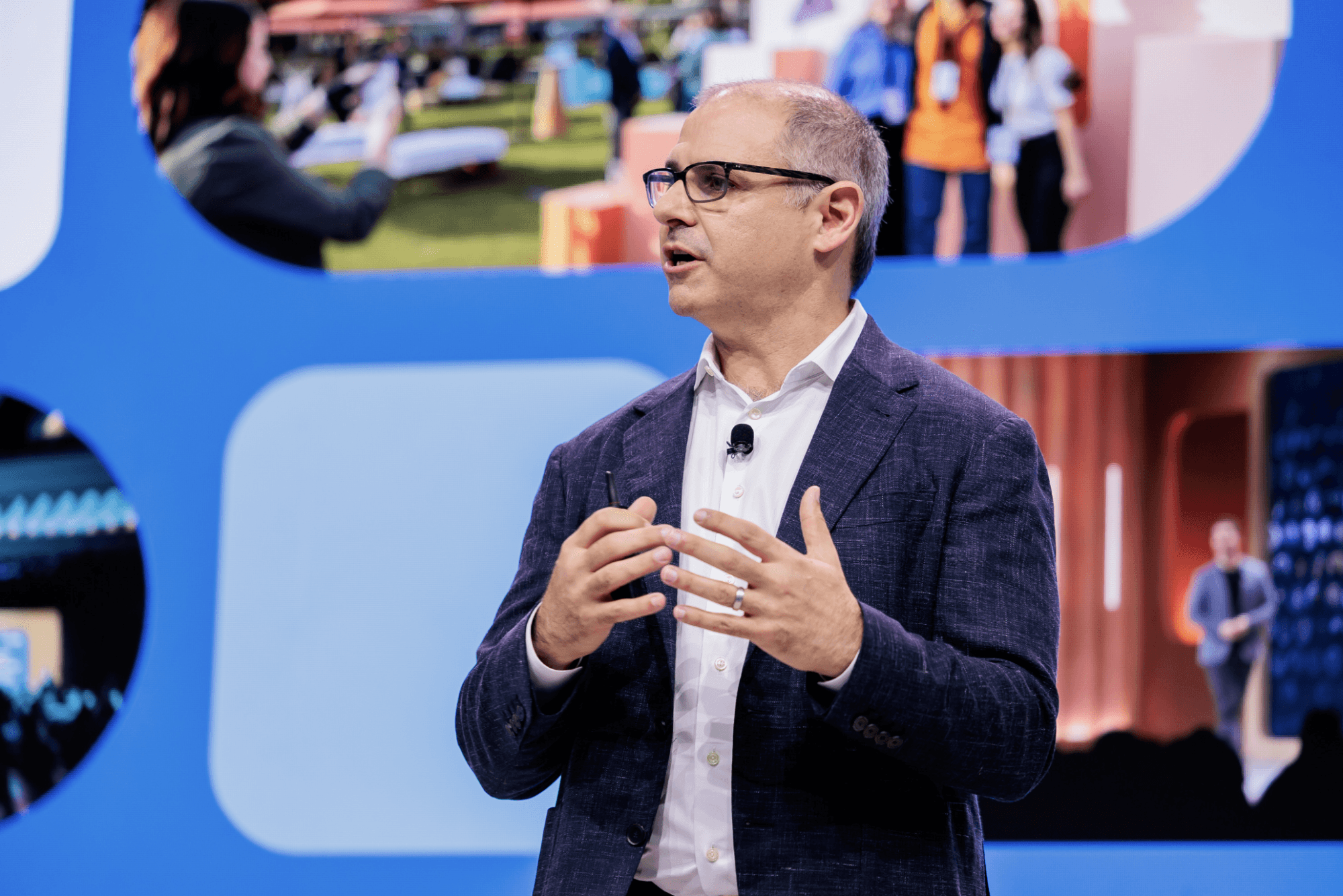
In their Talent Connect keynotes, LinkedIn CEO Dan Shapero and Vice President of Product Management Dan Reid were candid that feedback on the first version was mixed.
“There’s this stat that one of the product teams shared where they shipped a new model in Hiring Assistant to see if it was better,” Shapero said in his keynote. “What they claimed was that in the last four weeks since we shipped it we’ve iterated, and now the expletives in the product from recruiters have gone down.”
“Just be smarter”
Humor aside, customer feedback drove the development of Hiring Assistant 2. As Reid put it in his keynote, customers wanted Hiring Assistant to “just be smarter.”
Hiring Assistant 2 is contextually aware, has a persistent memory tied to each recruiter, and is able to make more intelligent inferences, responding to the user’s intent. The goal was to make the product able to “do what I meant, not what I said.”
In practice, the assistant fills in a sparse search from the recruiter’s and company’s hiring history. LinkedIn’s example: a request for a product manager now returns candidates near the office, in retail and at mid-level, because that is who the recruiter has hired before. It can also apply company rules, such as never recruiting from the company’s own subsidiaries.
Recruiters can type criteria that don’t work as keywords, such as “fresh perspective,” and the system will interpret them. Recruiters can review and confirm the inferred criteria.
For each candidate Hiring Assistant recommends, two new signals explain why that person made the list:
-
Fit signals give a personalized read on how well a candidate matches the role. They can flag mismatches, such as a candidate who grows existing accounts when the role calls for a prospector.
-
Candidate interest estimates how receptive someone is likely to be. It draws on platform engagement, Open to Work details and how often the person answers InMail.
Is this person real?
The other major issue driving the development of Hiring Assistant 2 was candidate fraud. LinkedIn’s internal research found that 64% of US talent acquisition professionals say it is getting harder to tell who and what is real.
“Ten years ago, this was not the problem we were talking about,” Shapero said of verifying candidates’ identity. “But this is the problem we have today.”
LinkedIn says 115 million members have verified their identity to date, and announced three changes:
- Colleagues will be able to verify each other’s employment, for members who can’t verify through traditional processes.
-
Employers will be able to flag profiles that falsely claim to have worked there and disconnect them from the company page.
-
Verification will be built into the job application itself.
I wrote about the need for this kind of verification back in July, and I’m glad to see that LinkedIn is incorporating it into the product.
Another form of proof of skills is Connected Apps, which launched in June and link a member’s profile to tools they use and display what they have done in them. LinkedIn’s Connected Apps menu currently lists 26 partners for this feature, and this looks like the start of a much larger ecosystem, where companies in a wide range of fields contribute data on what candidates can do and how they use their products. ElevenLabs and Medium, announced during the keynote, do not appear there yet.
Hiring Assistant 2 will combine these validations with ATS data, pre-screening answers and work history to provide a richer portrait of the candidate and flag inconsistencies.
Deeper into talent acquisition workflow
The first Hiring Assistant mostly handled the front end of recruiting: intake, sourcing and outreach. Version 2 reaches into screening and scheduling.
Companies that connect their applicant tracking system can have Hiring Assistant 2 evaluate their entire talent pool, including candidates who applied outside LinkedIn. When it rolls out, it will work integrate with with Greenhouse, Lever, SmartRecruiters, Zoho Recruit and Tracker. When a recruiter moves a candidate forward in LinkedIn, the change now syncs back to the ATS.
LinkedIn says Hiring Assistant completes pre-screening in a median of six minutes, and it has the ability to decide what should happen next for each candidate. A standout might be flagged for the recruiter to contact personally, while borderline candidates are sent to a screen.
The data flows in one direction
Nearly everything new in Hiring Assistant 2 depends on more data flowing into LinkedIn. Colleagues vouch for one another, employers flag fake employees, ATS vendors sync their applicant pools, and app partners report what members do on their platforms.
At the same time, LinkedIn is restricting the data flowing out. In September it took down the company pages of both Pin and Gem, two companies with AI sourcing products. Pin says it is still operating and working with LinkedIn to resolve the issue. Asked why, a LinkedIn spokesperson said, “LinkedIn takes action when necessary to prevent our members’ information from being scraped and used without their consent.”
In the age of AI, everyone is trying consolidate as much data as possible to feed the models. LinkedIn is better positioned than almost anyone to do it.