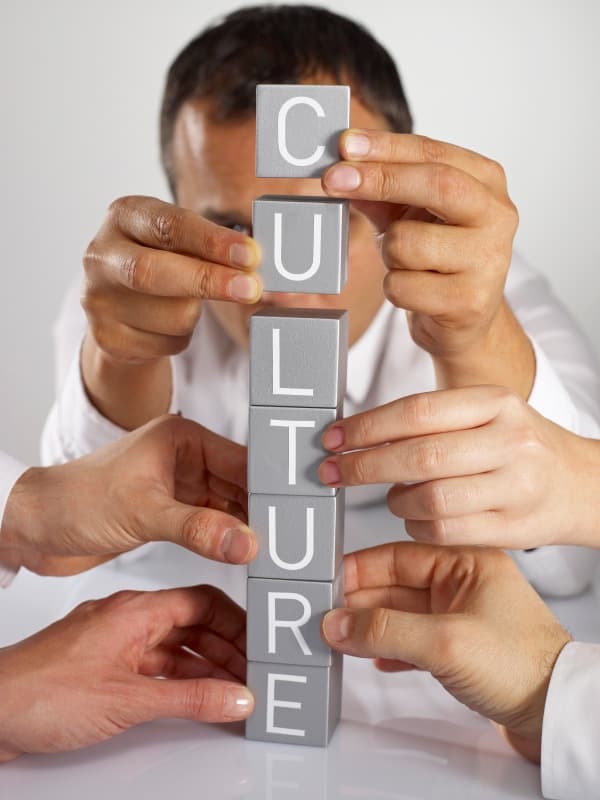
Culture is a hot topic. It was the Merriam-Webster “word of the year” for 2014.
Leaders and experts across the world are talking about how to develop an agile culture, implement a lean culture, overcome the culture clash in acquisitions, and many other areas of culture change.
Unfortunately, the reality is that most of these leaders and experts are actually focusing their efforts on climate and not dealing with the deeper, more powerful subject of culture. I didn’t understand the difference until the past few years.
What is climate?
Organizational climate is the shared perceptions and attitudes about the organization. The most visible area of a focus on culture that is actually climate is all the effort to measure and improve employee engagement.
This focus on engagement did yield results for some organizations. Unfortunately, according to Gallup’s Employee Engagement Study, the number of employees engaged at work has barely moved over the course of the last 15 years.
You know the drill. Employees are asked, for example, whether they know what’s expected of them, whether their opinions seem to count, and if their manager is paying attention to them. Organizations compile the results and “action plans” are developed.
It’s not just engagement surveys where people think they are getting to culture. The vast majority of so-called “culture” surveys and “great workplace” surveys primarily measure climate. Employees might be asked if the mission is clear, benefits are good, management shows appreciation, teamwork is encouraged, or whether the organization is effective at managing change. Climate, climate, climate.
The deeper side of culture
Organizational culture is the shared beliefs and assumptions about the organization’s expectations and values. These unwritten rules and perceived expectations drive our behavior in organizations. When faced with problems, challenges, or goals it often helps to understand the aspects of culture that either inhibit or support effectiveness.
To surface these aspects of culture, employees should be asked, for example, if they are expected or implicitly required to:
- Check decisions with superiors;
- Work to achieve self-set goals;
- Point out flaws;
- Take on challenging tasks;
- Never make a mistake;
- Not “rock the boat;”
- Make a “good impression;”
- Know the business.
We all have experienced the positive and negative impact of these perceived expectations. In some cases they help to propel our thinking forward to “act on what we know” and accomplish great things with constructive behavior.
In other cases, they lead to passive or aggressive behavior that undermines our effectiveness. Some organizations may actually be paralyzed by fear and plagued with inaction when they need the exact opposite.
Why focusing on climate can be a problem
Edgar Schein, arguably the No. 1 culture expert in the world, wrote in the Handbook of Culture and Climate:
A climate can be locally created by what leaders do, what circumstances apply, and what environments afford. A culture can evolve only out of mutual experience and shared learning.”
There is value in understanding how both climate and culture are influencing our work to effectively manage problems, challenges, or goals. The results of a focus on changing climate may lead to some quick wins, like managers temporarily engaging employees more effectively, but the improvements may be short-lived unless a culture shift occurs. I’ll share a clear example.
A culture change cut short after climate success
I was appointed president of a manufacturing organization. It was clearly a command and control culture. I vividly recall a top leader yelling at me: “You are from the new school that’s all about hugs and kisses, I am from the old school that’s about performance and giving people a swift kick in the ass when they need it.”
You can imagine what the culture was like as this aggressive behavior at the top led to extremely passive and conventional behavior on the front lines since most employees only did what they were told.
We embarked on a journey to quickly transform the organization. We managed three phases of improvement over a two-year period to support shared-learning and results:
- Stabilize — We had a massive company-wide focus on improving quality as we managed a roadmap of improvements related to clarifying the vision, team behaviors we should expect from each other, strategies, goals, measures, management systems, communication systems and motivation (rewards & recognition). We focused on a road map of organization-level improvements to create a “common core” in this phase while reinforcing new expectations to plan ahead, make and meet commitments, and cooperate with others
- Grow — We learned from the first phase of improvement together as a team and applied those insights to a company-wide focus on sales growth. We continued all the habits we started in the first phase and refined the approach as we included new strategies, goals, and measures targeted at growth. We implemented regional cross-functional teams so we could learn from our organization-level focus in the stabilize phase and apply it to a sub-team approach in this phase. The expected behaviors defined in the first phase were now applied in this new team structure.
- Innovate — We launched a cross-functional innovation team that met weekly and launched industry-leading innovations in a short period of time. We were ready for an innovation focus after building the “common core” and improving collaboration across sub-groups/teams. We also implemented a dramatically improved individual employee development system.
Can you transform a culture in 2 years?
Our business results improved substantially over the two years in nearly every area. The board member I reported to said “I can’t believe the change.”
We conducted a “culture” survey at the beginning of this journey but it was one that primarily measured areas of climate. We moved from the lowest possible score in eight of 12 categories to the top 20th percentile in most areas as the climate was transformed.
I was happy about the improved results, but was the culture completely transformed in two years as the survey results would have led many to believe? No way. I knew that while these climate results had clearly skyrocketed the culture journey was just underway.
I ended up leaving the organization to accept a role in a part of the country that was a better fit for my family. An acquisition was finalized soon after I left and I was replaced by someone with a dramatically different leadership style. The operating model we built began to fall apart and results deteriorated very fast. The Board decided to sell the assets to its largest competitor and the story was over. Climate success was short-lived and over-shadowed by the fragile state of our developing culture.
The bottom line
It’s critical to understand both climate and culture.
- Understand what you are measuring. Don’t be fooled by engagement or other climate measures and think you are measuring the behavioral norms and underlying assumptions.
- Don’t get stuck on the climate treadmill since your results will change as leaders, workload, policies, and other areas change. Climate is extremely important but don’t lose sight of culture.
- If you are interested in sustainability, it’s critical to understand how culture is both helping and holding back your progress as you deal with problems, challenges, and goals.
- Use a phased approach to constructive culture change so you build on shared learning and experience as you manage work on top performance priorities.
- It’s your culture that endures as people come and go from your organization and, ideally, allows you to effectively deal with new problems, challenges, and goals.
Have you heard of the difference between culture and climate? How have you successfully moved to the deeper side of culture to shift shared beliefs and assumptions about an organization’s expectations and values?
This post originally appeared on CultureUniversity.com.