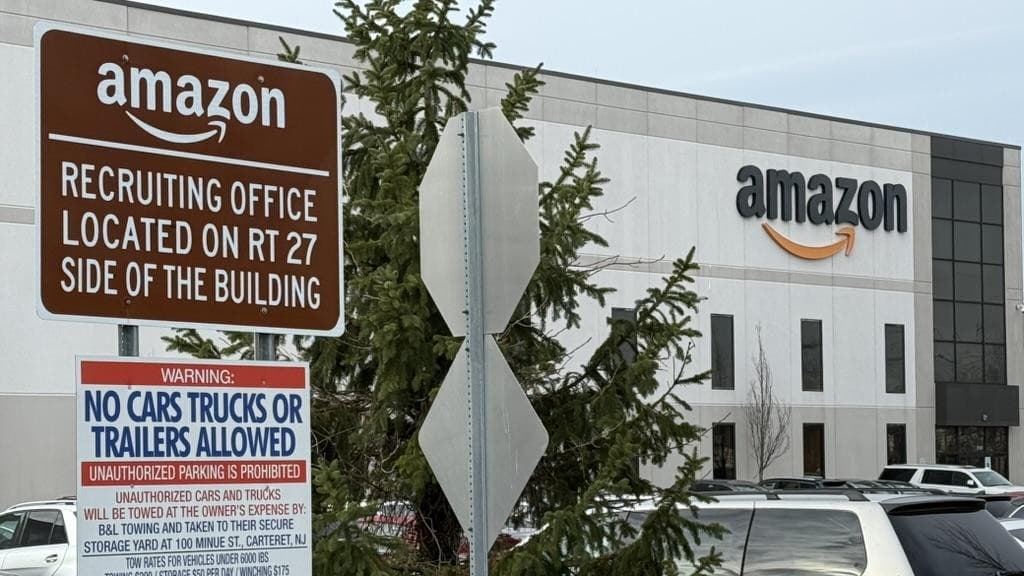
When Amazon says it won’t need 600,000 future hires because of robotics, it’s not just a business efficiency headline. It’s a turning point. The era of future-proof jobs is closing faster than any economist predicted.
We’ve crossed the AI + Robotics inflection point—automation is no longer confined to the factory floor. It’s advancing into the domains we once considered safe: analysis, management, and even decision-making. The rules of work are being rewritten in real time, and the new authors are algorithms.
The Skill Crisis, Not the Job Crisis
This isn’t a job shortage; it’s a skill mismatch.
According to the World Economic Forum, 44 percent of core skills will change within five years. IBM research shows 40 percent of the global workforce will need reskilling because of AI integration. The half-life of a skill has collapsed to about three to five years.
In other words, we’re teaching people for a world that has already expired. The conversation shouldn’t be “Will jobs disappear?” but “How quickly can we unlearn and relearn?”
Education at the Crossroads
Universities are still built for predictability, not adaptability. Curriculum refresh cycles stretch a decade, while the workplace evolves by quarter.
A few pioneers—Georgia Tech’s AI-infused MBA, NUS’s lifelong learning framework—hint at the path forward. But for most institutions, degrees remain static markers in a dynamic world.
We’re facing a credential crisis: formal education still certifies knowledge, but not relevance. The future belongs to systems that validate capability, not tenure.
Reskilling as Infrastructure
Reskilling can’t be treated as a corporate training initiative or a government grant program. Its infrastructure is as critical as energy or transport.
Nations like Singapore (SkillsFuture) and the UAE (Nafis) are already building public-private learning ecosystems. Corporations are following suit:
- AT&T invested $1 billion in workforce retraining.
- Accenture’s “Synapse AI” blends human-machine co-learning at scale.
- Even Amazon, the automation archetype, is spending $700 million on upskilling programs.
This isn’t philanthropy; it’s survival. Talent pipelines are being rebuilt from within.
A Post-Job Economy
We often use “work” and “job” interchangeably. They’re no longer synonyms.
A job is a container—title, department, pay grade.
Work is contribution—creativity, empathy, problem framing, systems thinking.
As robotics and AI take over containers, humans must redefine contribution. The shift is toward portfolio careers, fluid skills, and purpose-driven projects. The 9-to-5 template won’t vanish overnight, but its monopoly on meaning already has.
The Leadership Imperative
For leaders, this isn’t an HR problem. It’s a strategic imperative.
Workforce Strategy now sits beside Capital Allocation and Risk Management on the boardroom agenda. The next decade’s competitive advantage will hinge on who designs the human-machine bridge best.
- CEOs must act as Workforce Architects, not just business operators.
- CHROs must become Chief Reinvention Officers, translating disruption into design.
- Policymakers must align education with employability, not credentials.
Because the real disruption isn’t AI—it’s leadership inertia.
The New Social Contract
Every technological revolution forces a renegotiation of the relationship between humans and work.
This time, the stakes are existential.
Automation will erase friction, not ambition. But ambition without redesign will only accelerate inequity. We need a new social contract where learning is continuous, contribution is fluid, and dignity isn’t defined by headcount.
The question isn’t how many people will lose jobs.
The real question is who is designing the bridge to what’s next.
Final Reflection
The future won’t wait for us to reskill.
It’s already recruiting without us.
The organizations—and nations—that treat learning as a living system will define the next century of prosperity. The rest will keep updating policies for a world that no longer exists.