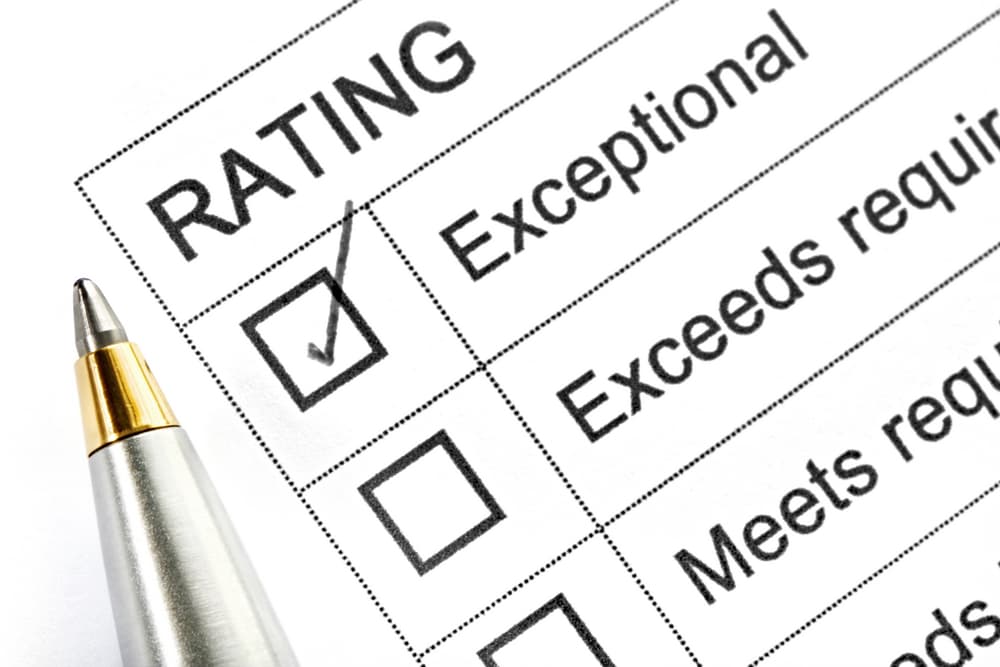
Employers need a restart on performance management.
Picture Sisyphus pushing that rock. A search on the question, “Do appraisals do more harm than good?” returned over 7 million hits! Continued reliance on the widely used approach is not going to gain that seat at the executive table.
The problems can be traced to the early Personnel offices of almost century ago. The policy was introduced to limit the autocratic authority of managers. Unfair, punitive managers prompted employees to form unions.
Appraisals then had a limited purpose – to confirm employees had satisfied expectations, did what they were told, and stayed out of trouble. HR has been pushing managers to complete appraisal forms ever since. They clearly do not see the value.
For years researchers worked to design more defensible practices. Technology has been the focus for the past decade. Nothing has increased the acceptance of what managers were required to use, however. If anything, the number of critics has increased and gotten louder.
A new approach to performance management
HR does not need the criticism. There have been too many articles questioning the value of HR.
If HR practices were ranked by their effectiveness, using the Jack Welch “rank-and-yank” logic, performance management would be fired. Some want to fire HR.
The article discussing the new GE approach, GE’s Real-Time Performance Development, published on HBR.org, is the first to give me hope performance management will gain broad acceptance. It was written by two line managers; I did not see a reference to HR. It redefines the role of managers from control to coaching and the focus from the past to the current and future.
The authors made the point that the new approach was instrumental in realizing “a five-fold productivity increase in the past 12 months.” That should convince every CEO it’s worth the investment.
Five lessons to keep in mind
My purpose here is to augment the GE story with lessons I’ve learned over the years.
- Performance management is a management problem. Effective performance management happens in the conversations between a manager and his/her people. HR specialists are rarely involved in these conversations. The commonly used appraisal forms have minimal impact. HR keeps the records, provides training, follows up when managers are late, handles complaints, etc. HR is on the sidelines handing out the Gatorade.
- Top management has to make the management of performance a priority. I managed the pay and performance systems in a company where the CEO refused to fill out the forms. Not surprisingly the next level and the next level and so on did not spend much time complying with HR’s directives. (I was under 30 and a greenhorn so I did not push back.) I’ve seen a similar reality in a number of clients. Today I realize leaders need to see the process as valuable.
- The focus should be on the individual, his/her progress and skill development. The issues discussed – GE’s “touch points” – should be goals, changing priorities, problems that need to be addressed and resources needed. It’s an ongoing dialogue. They also discuss behaviors that should be continued and areas and ways to improve behavior. The approach is consistent with a continuous improvement philosophy. Football coaches are good models. They provide position [read job] specific advice when players come off the field, at half time and between games. The best coaches are strategists and teachers.
- The performance system should facilitate performance discussions. If truly effective performance management rides on frequent, brief conversations, then the system should be planned to help managers with those discussions. Even within HR the metrics and competencies for success, for example, in training differ from those important to compensation specialists. Teams of high performers working as “‘subject matter experts” are well qualified to identify performance criteria that are credible and widely accepted. The use generic performance criteria began before World War II.
- Effective people managers should be rewarded. Research has shown managers have more impact on performance than any other factor. The recent articles on Google’s people philosophy are consistent with and reinforce the research conclusions. Employers that believe in rewarding performance should also reward the managers who get the best out of their people. High performance is always a shared accountability. Those who are ineffective should be moved to non-supervisory roles. That sends a powerful message.
A chance for HR to show it’s value and expertise
The performance system is best seen as a tool for managers. As any tool, its value depends on how it’s used.
If it’s rejected, it needs to be replaced. To secure buy-in, teams of “customers” — the best managers and high performing employees serving as subject matter experts — need to be involved in the planning. With guidance they are well qualified to decide how to plan, manage and evaluate performance.
This is about gaining employee commitment and raising performance levels. Equally important is challenging employees and tapping their capabilities more fully. The gains may not be “five-fold” but in every organization with a “command and control” management style employees have unused capabilities that can be tapped by managers who “empower and inspire,”, to quote from HBR‘s GE article.
This provides an opportunity for HR to redefine and expand its role.
The changes will not be possible without leadership. Many managers will find the transition to be difficult. They will need feedback and coaching to develop the key managerial behaviors.
Communication will be essential. Periodic assessment of progress and fine tuning of plans will increase the prospect for continued success.
It’s an opportunity for HR to demonstrate its expertise and its value.